
The Power Your Event Needs
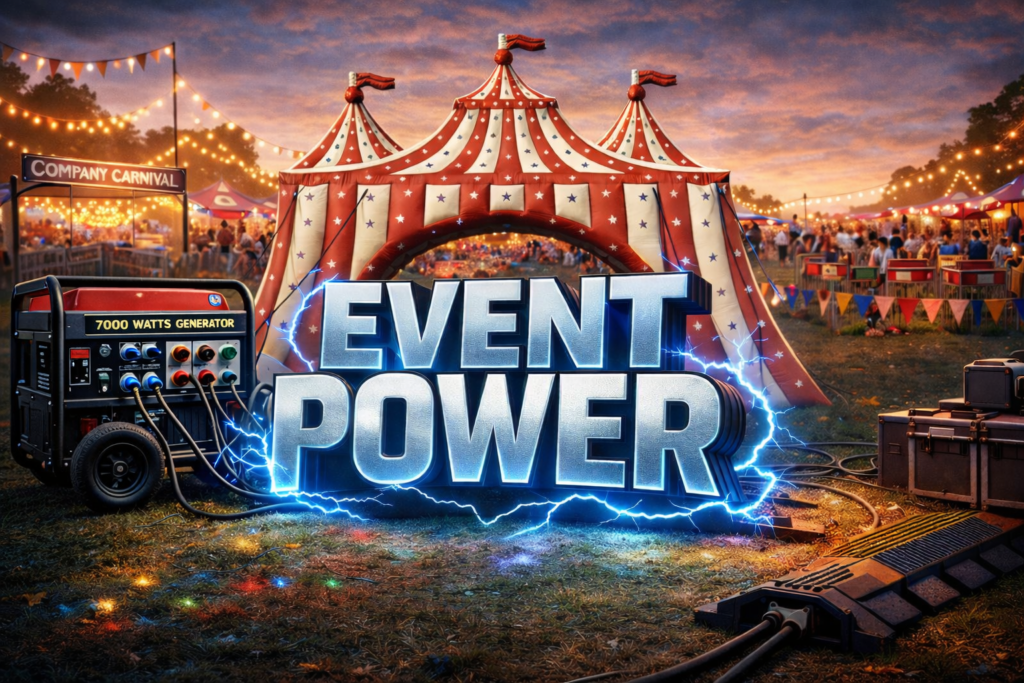
Event Power Planning: A Simple Guide for Smooth Events
When you’re planning an event, power is one of those behind-the-scenes details that
can make everything feel seamless… or turn the day into a last-minute scramble.
Lights, music, vendors, photo booths, food trucks, inflatables, charging stations, almost
everything that creates a great experience needs electricity. And the truth is, power is
often the last thing people think about until something trips, shuts off, or doesn’t work.
The goal is to make sure that it never happens.
Here’s a simple, straightforward guide to event power—and how to plan it the smart way
so your event runs smoothly from setup to breakdown.
1) Start With the Big Question: What Needs Power?
Before you ever bring in a generator or start laying out cables, start with one question:
What needs to plug in?
Build a complete power list for every event. Common power needs include
- DJ setups or live band equipment
- Speakers and microphones
- String lights, uplighting, and spotlights
- Food trucks and vendor booths
- Coffee carts, popcorn machines, cotton candy machines
- Bounce houses and inflatables
- Heaters or fans
- Photo booths and 360 booths
- Projectors and screens
- Refrigerators and warming units
- Registration areas, laptops, and tablets
Pro tip: If it plugs in, it goes on the list—especially for vendors. One of the most
common issues is vendors arriving and expecting power that wasn’t planned for.
Prevent it before event day.
2) Decide Where the Power Is Coming From
Power plans should be designed around the event space, layout, and guest experience.
Most events rely on one (or a mix) of these power sources:
Option A: Building or Venue Power
Perfect for indoor events or venues with strong electrical access.
☐ Reliable and quiet
⚠️ Can be limited when multiple vendors share circuits
Option B: Generator Power
Ideal for outdoor events, large layouts, or venues with limited electricity.
☐ Flexible and scalable
☐ Can power an entire event site
⚠️ Requires planning for placement, fuel, sound, and cable routing
A strong plan includes knowing when venue power is enough—and when a generator is the safer option.
3) “Enough Power” vs. “Safe Power”
One of the biggest mistakes people make is assuming that outlets automatically mean
enough power.
A single outlet can overload quickly if you plug in:
- Speakers
- Fog machines
- String lights
- Coffee warmers
- Vendor equipment
Suddenly breakers are tripping, music cuts out, and the event momentum is lost.
Good event power planning doesn’t just provide electricity—it balances the load. That means distributing power safely across circuits and generators, so nothing is pushed beyond its limit.
4) Layout Matters More Than You Think
Power planning isn’t just about how much power you need, it’s also about where
everything is located.
Plan around questions like:
- Where will vendors set up?
- Where is the stage or DJ located?
- How far is the nearest power source?
- Will cords cross guest walkways?
For outdoor events or spread-out layouts, professional cable management and
generators make a big difference in both safety and appearance.
5) The Small Details That Make a Big Difference
These are the behind-the-scenes details that keep power safe, clean, and reliable:
☐ Cable covers and cord ramps
Protect guests and equipment.
☐ Gaffer tape
Stronger than duct tape and removes cleanly.
☐ Weather protection
Covered connections, elevated cords, and rain-ready planning.
☐ Heavy-duty extension cords
Outdoor-rated and designed for event use.
☐ Quality power strips
Not bargain-bin equipment—reliable power matters.
6) The Power Check Before Event Day
Before every event, run through a full power checklist:
☐ All powered items accounted for
☐ Vendor power needs confirmed
☐ Venue power or generator plan finalized
☐ Cable routes mapped
☐ Circuits balanced
☐ Outdoor-rated equipment in place
☐ Cords covered across walkways
☐ Weather protection planned
☐ Backup supplies ready
This preparation is what allows events to feel effortless.
7) When It’s Time to Bring in the Pros
If any of these apply, professional event power planning is essential:
- Multiple vendors
- Inflatables or interactive attractions
- Stage sound and lighting
- Outdoor events with long cable runs
- Cooking or heating equipment
- Large crowds
- Situations where power failure would impact the experience
Power is the backbone of your event. If it fails, everything else stops.
Final Thoughts: Power Planning = Peace of Mind
The best events feel easy. Music never cuts out. Lights stay glowing. Vendors stay
happy. Guests have fun. And you get to enjoy the event instead of troubleshooting
problems.
Power may not be glamorous—but it’s one of the most important parts of a successful
event.
If your event includes lighting, music, vendors, inflatables, photo moments, or themed installations, make power part of the planning early—and make sure it’s done safely and professionally.